
Category: Blog Post
-
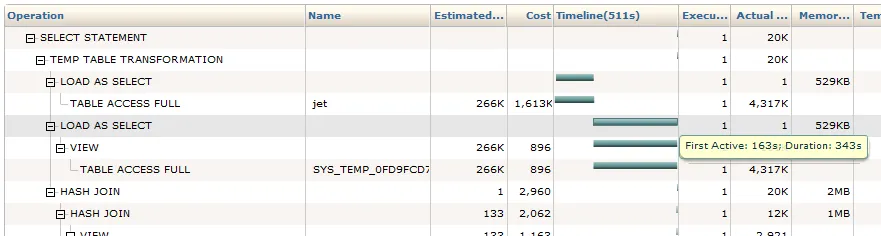
How to speed up external C functions via Java
How to speed up external C functions via Java Are you calling external C libraries from inside your Oracle SQL? Especially if those calls are made on a row-by-row basis you might see a significant performance benefit from calling your external C libraries via Java! Introduction: As part of my work as an Openlab fellow
-

ASM Metadata, Internals and Diagnostic Utilities
ASM Metadata, Internals and Diagnostic Utilities If you use ASM on a regular basis, you may find that knowledge of the internals can be very useful for advanced troubleshooting and in general to acquire familiarity with the technology. In particular this is even more relevant when using ASM capabilities for data redundancy/mirroring (i.e. when deploying
-
Recent Updates of OraLatencyMap and PyLatencyMap
Recent Updates of OraLatencyMap and PyLatencyMap Topic: This post introduces the latest changes to OraLatencyMap and PyLatencyMap, two custom tools for collecting and displaying Oracle wait event latency details using heatmaps. OraLatencyMap is a SQL*Plus tool, with a core written in PL/SQL, aimed at studying Oracle random I/O by displaying the latency drill-down of the
-
Unified auditing performance
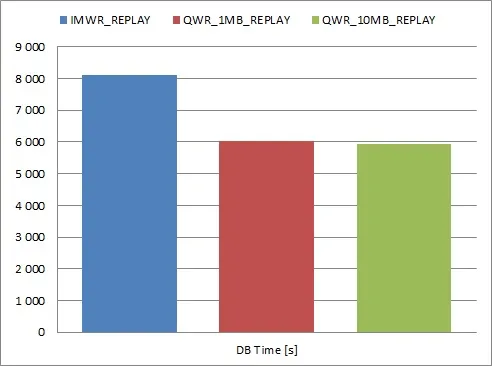
Unified auditing performance In my previous blog post (http://db-blog.web.cern.ch/blog/szymon-skorupinski/2014-05-migrating-oracle-database-12c-what-do-auditing) I provided you with number of reasons why unified auditing looks very promising and should be seriously considered while migrating to 12c. Nonetheless, I was not talking at all about performance – which also seems to be greatly improved. Main source of the improvement is related
-
Oracle Optimizer Investigated with Flame Graphs
Oracle Optimizer Investigated with Flame Graphs Topic: This post is about investigating the Oracle Optimizer using stack sampling and flame graphs. We will see how the complexity of the Optimizer has increased over the years and in particular with the introduction of cost-based optimization and more recently with 12c adaptive optimization. Context and goal: Stack
-
Flame Graphs for Oracle
Flame Graphs for Oracle Topic: This post is a hands-on introduction to using on-CPU Flame Graphs for investigating Oracle workloads. This technique is about collecting and visualizing sampled stack trace data to analyze and troubleshoot Oracle processes at the OS level (in particular applied to Linux). Motivations: The techniques and tools described here can be
-
Indexes in Oracle DB part 1
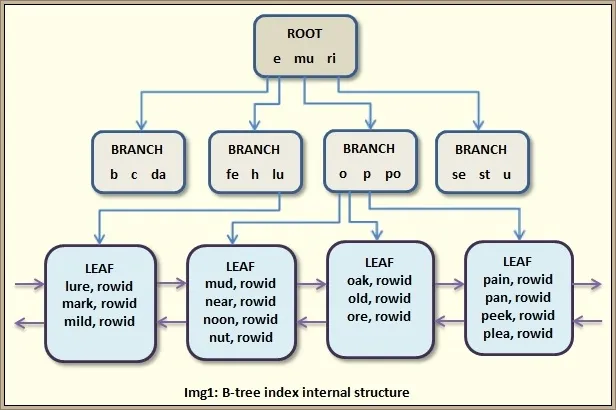
Indexes in Oracle DB part 1 Indexes… what indexes? Indexes are one of the key Oracle features in terms of improving query performance and one might think it should be clear to everybody when and how to use them. Not at all… Working as a DBA for several years I was surprised to notice that
-
Starting workload capture hangs – is it really problem with RAT?
Starting workload capture hangs – is it really problem with RAT? If you plan to introduce changes in your environment and want to estimate their impact, Real Application Testing feature seems to be one of the best options. As we needed to check the influence of changes planned in our databases, I’ve started to look
-
Migrating to Oracle Database 12c – what to do with auditing?
Migrating to Oracle Database 12c – what to do with auditing? If you consider migrating to Oracle Database 12c, no matter if you think of development, testing or production environments, one of many decisions you need to take is to define what to do with the auditing. The biggest new feature in this area is
-
A Closer Look at CALIBRATE_IO
A Closer Look at CALIBRATE_IO Topic: This blog entry is about investigating Oracle’s DBMS_RESOURCE_MANAGER.CALIBRATE_IO Spoiler: For quantitative analysis of storage performance and in particular for measuring random read I/O in Oracle, I’d rather advise the use tools that allow generating test workloads in a controlled manner, in a way that can be understood and measured