
Tag: AWR
-

CPU Load Testing Exercises: Tools and Analysis for Oracle Database Servers
CPU Load Testing Exercises: Tools and Analysis for Oracle Database Servers This document describes some basic CPU load testing exercises on three different types of database servers used by the Oracle Service at CERN. It reports on the tests performed, tools used for data gathering, data analysis, findings, and lessons learned. Motivations CPU usage is
-
PerfSheet.js: Oracle AWR Data Visualization in the Browser with JavaScript Pivot Charts
PerfSheet.js: Oracle AWR Data Visualization in the Browser with JavaScript Pivot Charts PerfSheet.js is a tool aimed at DBAs and Oracle performance analysts. It provides a simplified interface to extract and visualize AWR time series data in the browser using javascript. The reason for a tool like PerfSheet.js is to make the analysis of AWR
-
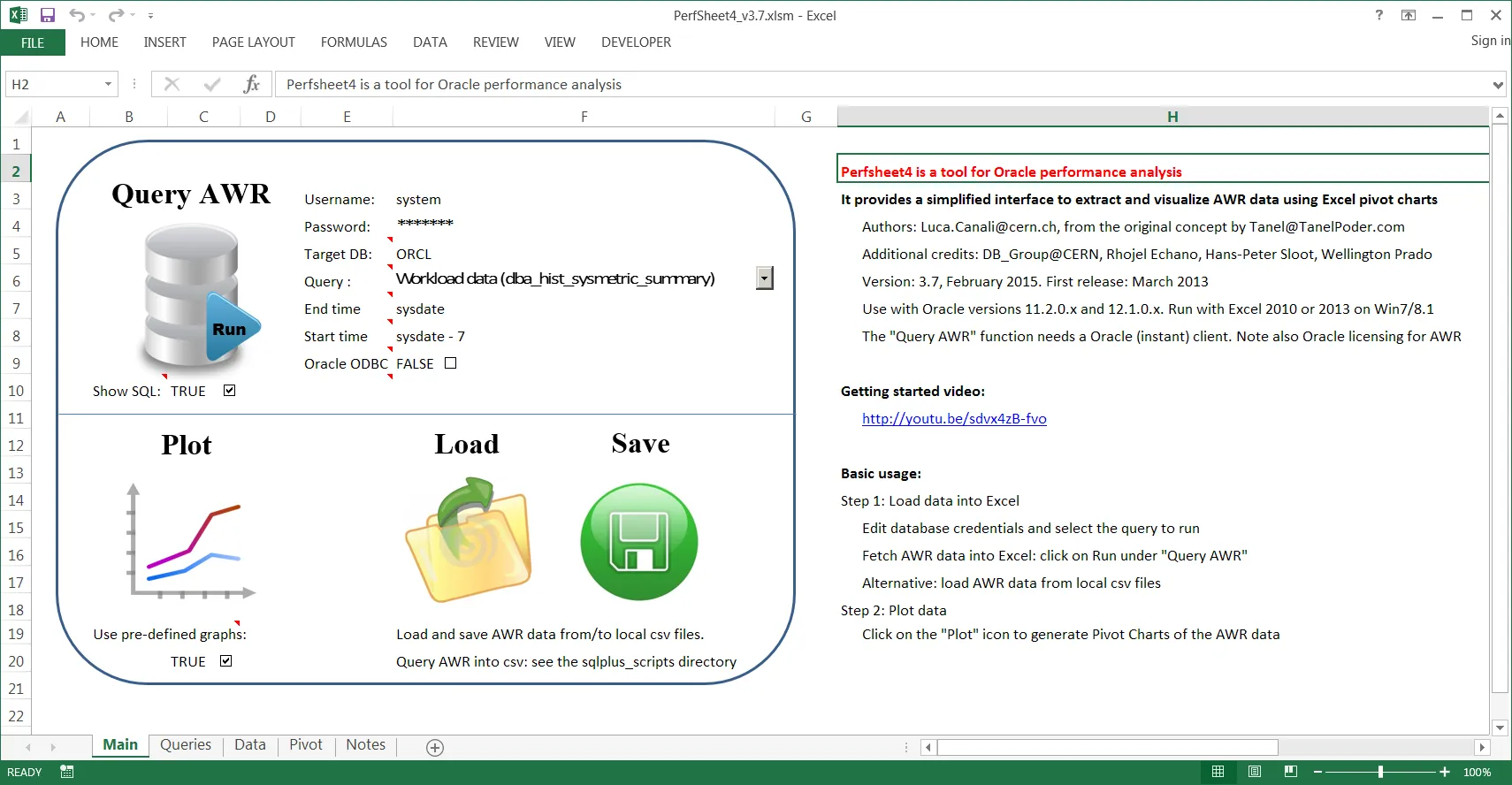
Latest updates to PerfSheet4, a tool for Oracle AWR data mining and visualization
Latest updates to PerfSheet4, a tool for Oracle AWR data mining and visualization Topic: This post is about the latest updates to PerfSheet4 v3.7 (February 2015). PerfSheet4 is a tool aimed at DBAs and Oracle performance analysts. It provides a simplified interface to extract and visualize AWR time series data using Excel pivot charts. Why
-
Starting workload capture hangs – is it really problem with RAT?
Starting workload capture hangs – is it really problem with RAT? If you plan to introduce changes in your environment and want to estimate their impact, Real Application Testing feature seems to be one of the best options. As we needed to check the influence of changes planned in our databases, I’ve started to look