
Tag: Docker
-

Unlocking Apache Spark Performance: Three Open-Source Tools We Use at CERN
Unlocking Apache Spark Performance: Three Open-Source Tools We Use at CERN Apache Spark is incredibly powerful, but anyone who has worked with it long enough knows the feeling: Why is this job suddenly slower today? Why are executors running out of memory? Why is one stage taking 90% of the runtime? What exactly is Spark
-
Exploratory Notebooks for Deep Learning, AI, and Data Tools: A Beginner’s Guide
Exploratory Notebooks for Deep Learning, AI, and Data Tools: A Beginner’s Guide Are you looking at some resources to get you up to speed with popular Deep Learning and Data processing frameworks? This blog entry provides a curated collection of notebooks that will help you kickstart your journey. You can find the notebooks at this
-
Building and documenting REST APIs with ORDS
Building and documenting REST APIs with ORDS Introduction In the first part of the article we will provide an overview of how you can use Oracle REST Data Services for providing APIs directly from your PL/SQL code . The second part covers how to document our Web services using Swagger. Lets begin with a couple
-
Benefits of a multi-layer system
Benefits of a multi-layer system Introduction Designing a multi-layer system is not rocket science, the difficulty can lie in selecting the right technologies. The main concept behind the design is to have better control and fine tuning of the components. This blog post will discuss the benefits & limitations of implementing this type of design
-
Oracle REST Data Services running on Tomcat – Basic Authentication using JNDI Realm
Oracle REST Data Services running on Tomcat – Basic Authentication using JNDI Realm What do we want to achieve? We want to protect our REST endpoints using Basic Authentication and authenticate the requests against our users directory (LDAP). We also want to manage the privileges centrally, through the ORDS Roles and Privileges (https://oracle-base.com/articles/misc/oracle-rest-data-services-ords-authentication#ords-roles-and-privileges), so no
-
A Performance Dashboard for Apache Spark
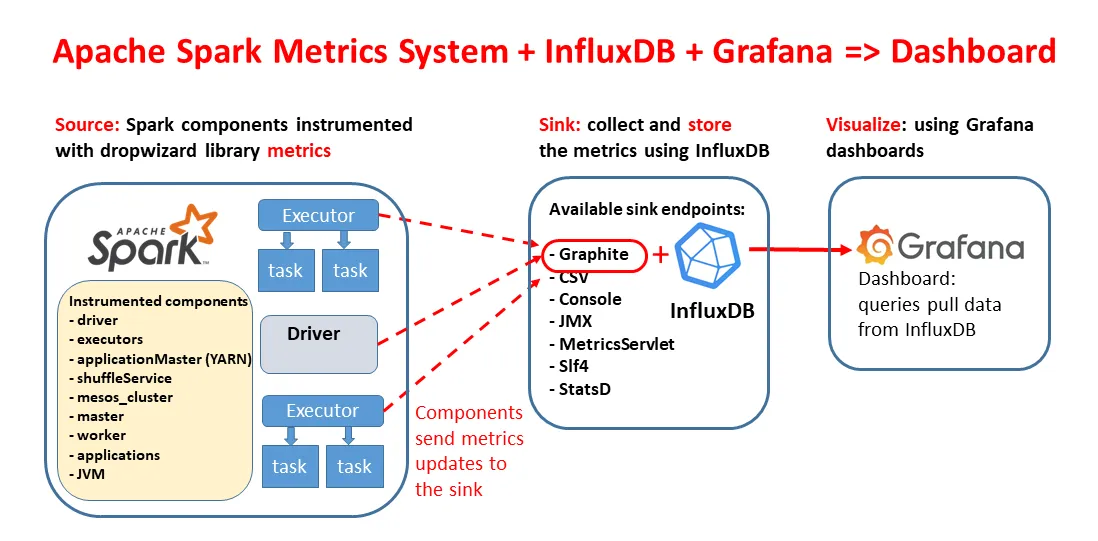
A Performance Dashboard for Apache Spark Topic: This post dives into the steps for deploying a performance dashboard for Apache Spark, using Spark metrics system instrumentation, InfluxDB and Grafana. What problem does it solve: The dashboard can provide important insights for performance troubleshooting and online monitoring of Apache Spark workloads. In particular when running Spark
-
Minimal Oracle
Minimal Oracle The Oracle Database software is large, several gigabytes in Oracle Home for the part that is deployed on the operating system, and additional megabytes in SYSTEM tablespace for the part that is deployed as stored procedures (mainly the dbms_% packages). And this is not a problem with the traditional deployment methods where you
-
Configuring Technologies to Work with Java Mission Control
Configuring Technologies to Work with Java Mission Control Introduction Java Mission Control was introduced with JDK 7u40. With JDK 8u40 and later, you can get JMC to monitor any Java workload out of the box. However, in order to customise how JMC and JFR will act we need to configure the Java Virtual Machines and
-
Creating TLS certificates using Kubernetes API
Creating TLS certificates using Kubernetes API The purpose of this post is to explain the need of adding encryption to the network communications between containers, and how to achieve it at application level, creating Transport Layer Security (TLS) certificates with the already provided Kubernetes APIs. Is it necessary to add encryption between containers? When running