
Tag: Oracle
-

Minimal Oracle
Minimal Oracle The Oracle Database software is large, several gigabytes in Oracle Home for the part that is deployed on the operating system, and additional megabytes in SYSTEM tablespace for the part that is deployed as stored procedures (mainly the dbms_% packages). And this is not a problem with the traditional deployment methods where you
-
Oracle Index compression for range scan on file names
Oracle Index compression for range scan on file names Do you have tables with a column storing filenames? Long filenames with full path? If this is the case, then you probably realized how an index on this can be large. And when looking at the values sorted, you have seen the inefficiency of it: a
-
Oracle LIKE predicate and cardinality estimations
Oracle LIKE predicate and cardinality estimations There are not many ways to access efficiently to table rows. Either you want lot of them, because your predicate is not very selective, and you read the whole table in the fastest you can do. This is Table Full Scan. Or you use a structure that gives you
-
An .rpm to install Oracle Database 18c
An .rpm to install Oracle Database 18c It was announced at Oracle Open World 2017 and here it is just before the start of OOW18: an RPM to install the Oracle Database software. Download In the Oracle Database 18c download page there are two files for 18.3. One is a zip of the Oracle Home
-
ODC Appreciation Day : Reduce CPU usage by running the business logic in the Oracle Database
ODC Appreciation Day : Reduce CPU usage by running the business logic in the Oracle Database Here is my #ThanksODC post. A long one… There’s a point that should always be a major topic for database developer community discussions: where to run the procedural code. The access to data is in the database, for sure,
-
Unindexed Foreign Keys in Oracle and PostgreSQL
Unindexed Foreign Keys in Oracle and PostgreSQL In Oracle we need to have a index on the foreign key column as soon as we have the intention to delete from the parent row, or a locking situation may block all transactions around the child table. PostgreSQL has a similar way to manage isolation, with MVCC,
-
Oracle write consistency bug and multi-thread de-queuing
Oracle write consistency bug and multi-thread de-queuing Here is a quick test I did after encountering an abnormal behavior in write consistency and before finding some references to a bug on StackOverflow (yes, write consistency questions on StackOverflow!) and AskTOM. And a bug opened by Tom Kyte in 2011, that is still there in 18c.
-
Efficiently query DBA_EXTENTS for FILE_ID / BLOCK_ID
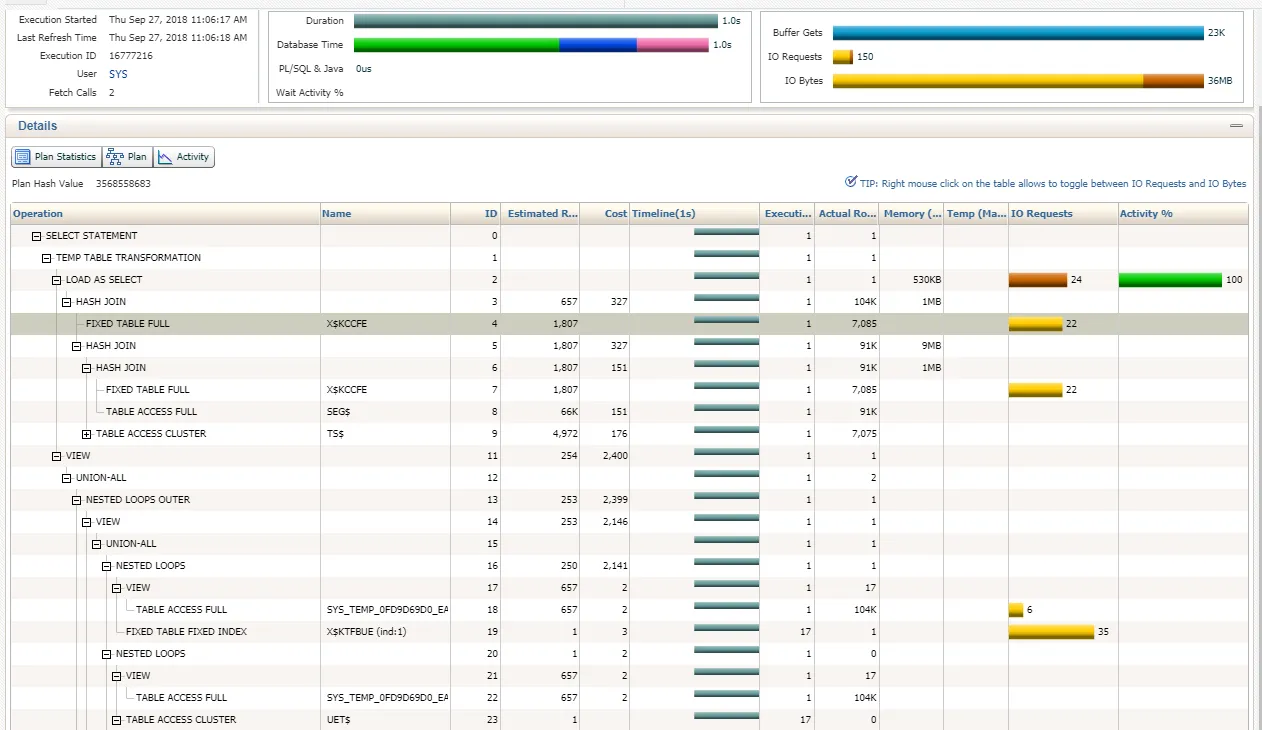
Efficiently query DBA_EXTENTS for FILE_ID / BLOCK_ID Did you ever try to query DBA_EXTENTS on a very large database with LMT tablespaces? I had to, in the past, in order to find which segment a corrupt block belonged to. The information about extent allocation is stored in the datafiles headers, visible though X$KTFBUE, and queries
-
Oracle Cloud: upload large files through the Object Store REST API
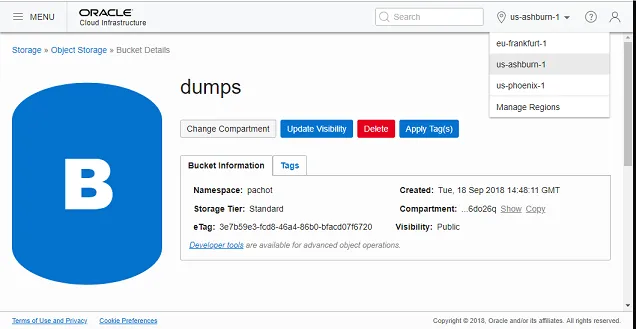
Oracle Cloud: upload large files through the Object Store REST API In the previous post I used a simple oci-curl() function as a Command Line Interface to the Oracle Cloud Infrastructure without installing any client tool or language. It was easy for simple things such as starting and stopping services. But it can also be
-
Oracle Cloud: start/stop automatically the Autonomous Databases
Oracle Cloud: start/stop automatically the Autonomous Databases In the previous post I’ve setup all the environment to be able to easily control the OCI services without bothering with the sign-in headers, and without installing anything. In this post I’ll used the oci-curl() function to stop all my Autonomous Database services. In the previous post, I’ve