
Tag: tool
-

Apache Spark 3.0 Memory Monitoring Improvements
Apache Spark 3.0 Memory Monitoring Improvements TLDR; Apache Spark 3.0 comes with many improvements, including new features for memory monitoring. This can help you troubleshooting memory usage and optimizing the memory configuration of your Spark jobs for better performance and stability, see SPARK-23429 and SPARK-27189. The problem with memory Memory is key for the performance
-
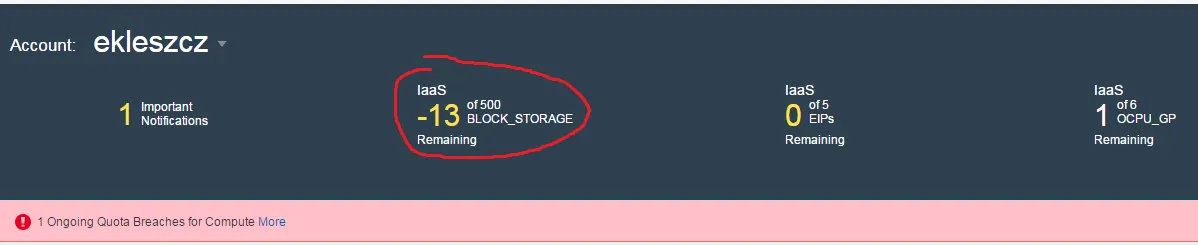
Building and documenting REST APIs with ORDS
Building and documenting REST APIs with ORDS Introduction In the first part of the article we will provide an overview of how you can use Oracle REST Data Services for providing APIs directly from your PL/SQL code . The second part covers how to document our Web services using Swagger. Lets begin with a couple
-
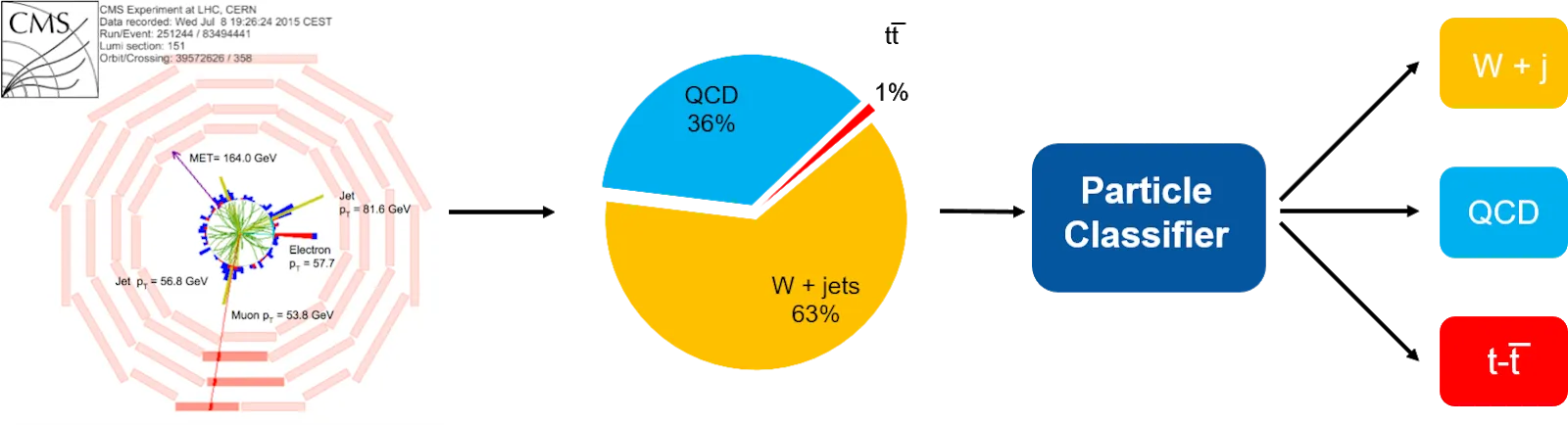
Machine Learning Pipelines for High Energy Physics Using Apache Spark with BigDL and Analytics Zoo
Machine Learning Pipelines for High Energy Physics Using Apache Spark with BigDL and Analytics Zoo Topic: This post describes a data pipeline for a machine learning task of interest in high energy physics: building a particle classifier to improve event selection at the particle detectors. The pipeline is built using tools from the “Big Data
-
Creating TLS certificates using Kubernetes API
Creating TLS certificates using Kubernetes API The purpose of this post is to explain the need of adding encryption to the network communications between containers, and how to achieve it at application level, creating Transport Layer Security (TLS) certificates with the already provided Kubernetes APIs. Is it necessary to add encryption between containers? When running
-

Performance Analysis of a CPU-Intensive Workload in Apache Spark
Performance Analysis of a CPU-Intensive Workload in Apache Spark Topic: This post is about techniques and tools for measuring and understanding CPU-bound and memory-bound workloads in Apache Spark. You will find examples applied to studying a simple workload consisting of reading Apache Parquet files into a Spark DataFrame. Why are the topics discussed here relevant
-
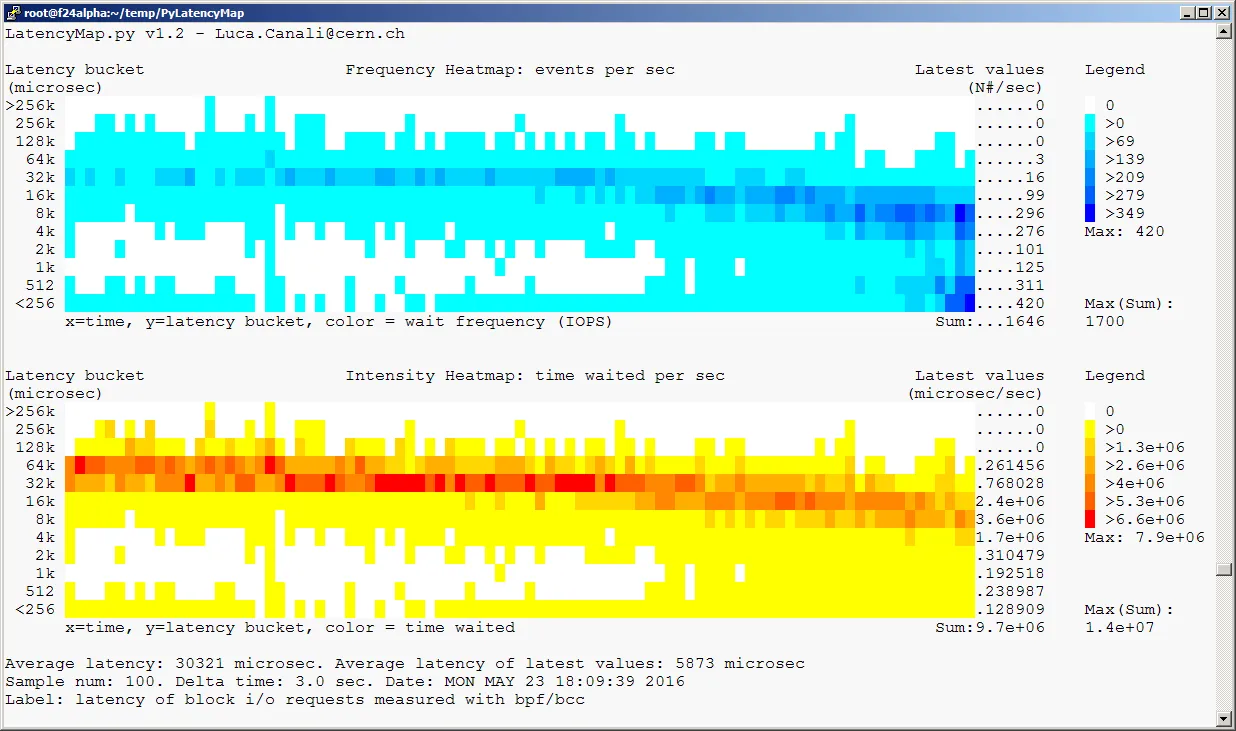
Linux BPF/bcc for Oracle Tracing
Linux BPF/bcc for Oracle Tracing Topic: In this post you will find a short discussion and pointers to the code of a few sample scripts that I have written using Linux BPF/bcc and uprobes for Oracle tracing. Previous work and motivations Tools for dynamic tracing are very useful for troubleshooting and internals investigations of Oracle
-
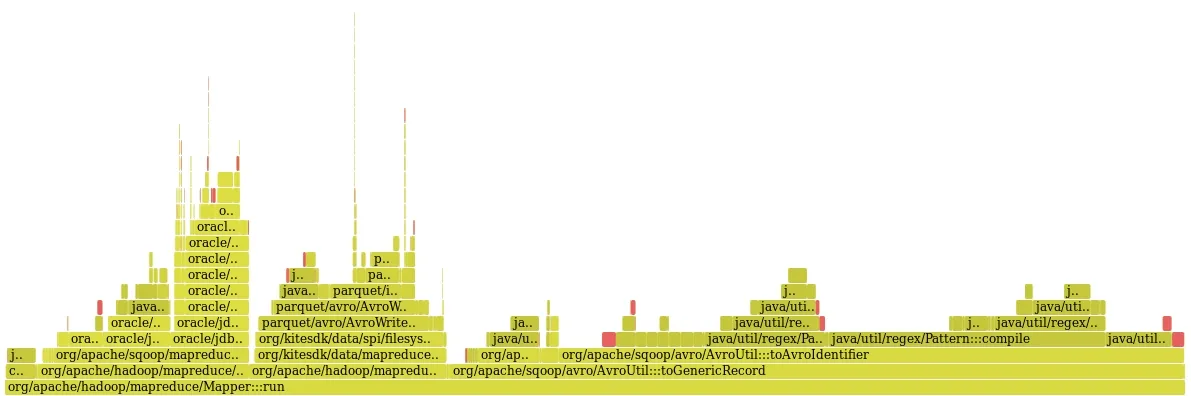
Hadoop performance troubleshooting with stack tracing, an introduction.
Hadoop performance troubleshooting with stack tracing, an introduction. Topic: This post is about profiling and performance tuning of distributed workloads and in particular Hadoop applications. You will learn of a profiler application we have developed and how it has successfully been applied to tuning Sqoop to improve the throughput of data transfer from Oracle to
-
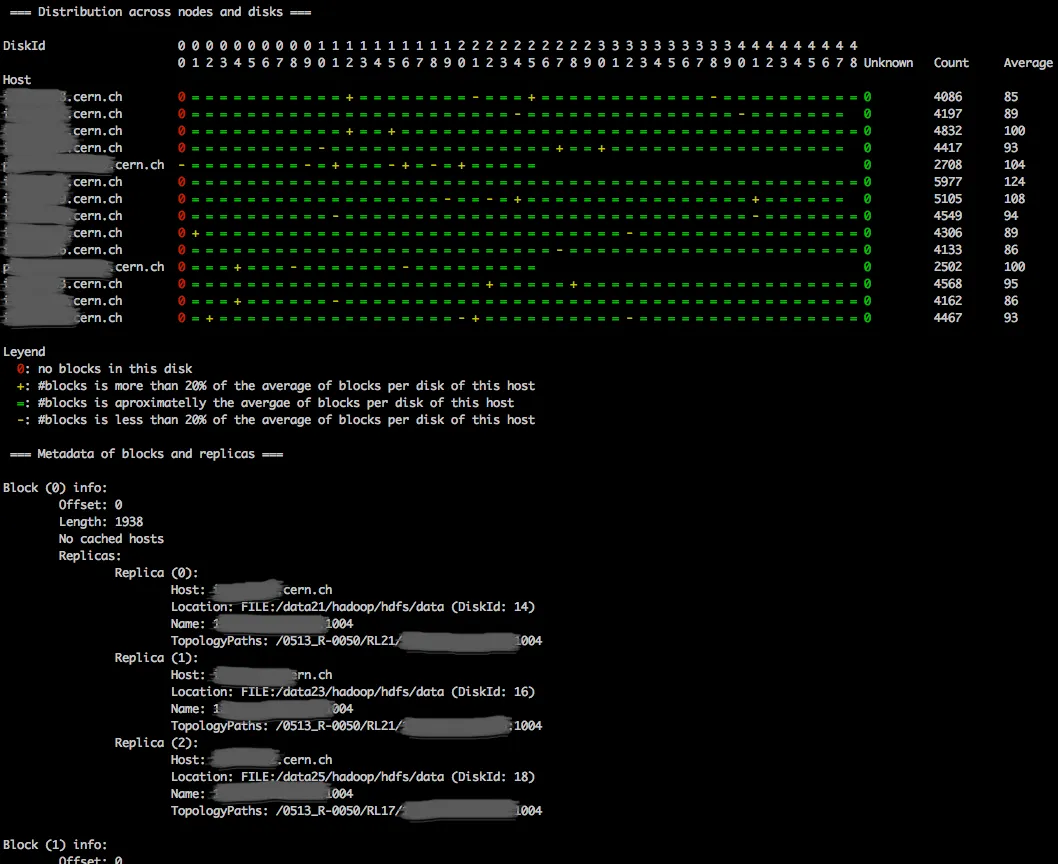
Tool to visualise block distribution on Hadoop (HDFS) cluster
Tool to visualise block distribution on Hadoop (HDFS) cluster Distributed systems always bring new challenges for administrators and users. This is the case with HDFS, the default distributed file system that Hadoop uses for storing data. In order to face these challenges, tools to facilitate administration and usage of these systems are developed. At CERN,
-
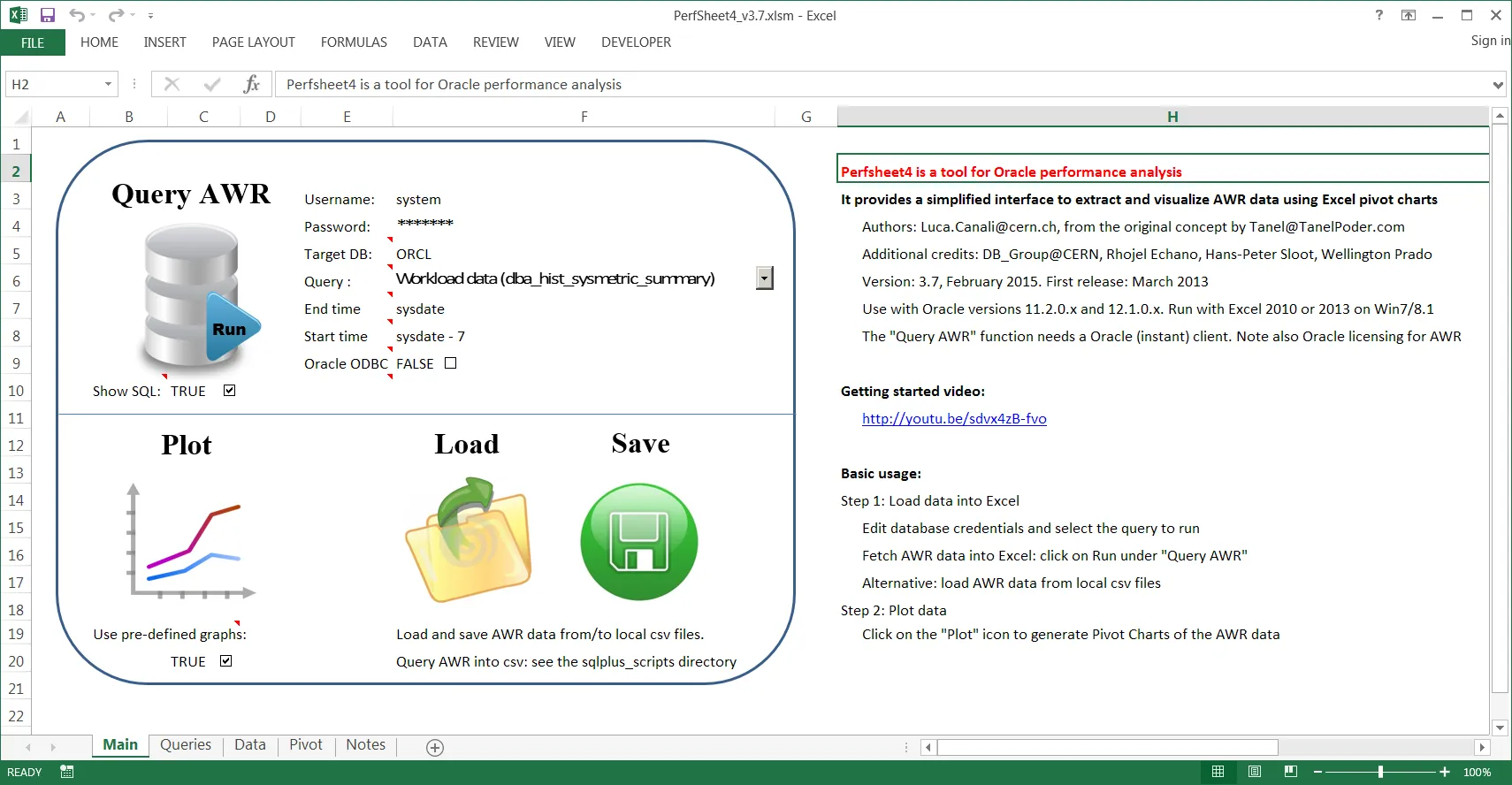
Latest updates to PerfSheet4, a tool for Oracle AWR data mining and visualization
Latest updates to PerfSheet4, a tool for Oracle AWR data mining and visualization Topic: This post is about the latest updates to PerfSheet4 v3.7 (February 2015). PerfSheet4 is a tool aimed at DBAs and Oracle performance analysts. It provides a simplified interface to extract and visualize AWR time series data using Excel pivot charts. Why
-
Scaling up Cardinality Estimates in 12.1.0.2
Scaling up Cardinality Estimates in 12.1.0.2 Topic: Counting the number of distinct values (NDV) for a table column has important applications in the database domain, ranging from query optimization to optimizing reports for large data warehouses. However the legacy SQL method of using SELECT COUNT (DISTINCT <COL>) can be very slow. This is a well