
Tag: LIKE
-
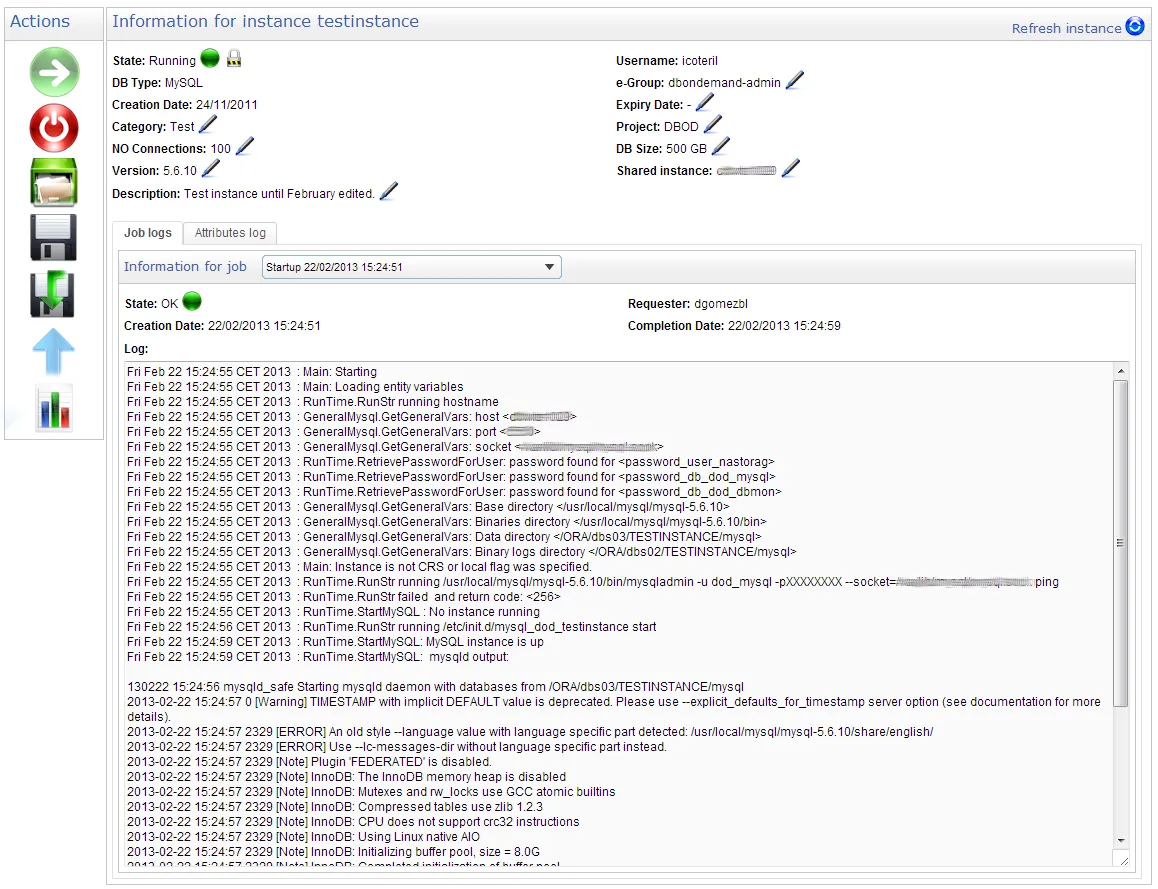
A new web application for the DBOD service
A new web application for the DBOD service Introduction The DBOD service maintains a web interface allowing “database on demand” users to carry out ordinary tasks without intervention of the administrators. It is with a view to ergonomy, but above all to modularity and scalability, that a complete redesign of this application has been initiated.
-

Creating TLS certificates using Kubernetes API
Creating TLS certificates using Kubernetes API The purpose of this post is to explain the need of adding encryption to the network communications between containers, and how to achieve it at application level, creating Transport Layer Security (TLS) certificates with the already provided Kubernetes APIs. Is it necessary to add encryption between containers? When running
-

Performance Analysis of a CPU-Intensive Workload in Apache Spark
Performance Analysis of a CPU-Intensive Workload in Apache Spark Topic: This post is about techniques and tools for measuring and understanding CPU-bound and memory-bound workloads in Apache Spark. You will find examples applied to studying a simple workload consisting of reading Apache Parquet files into a Spark DataFrame. Why are the topics discussed here relevant
-
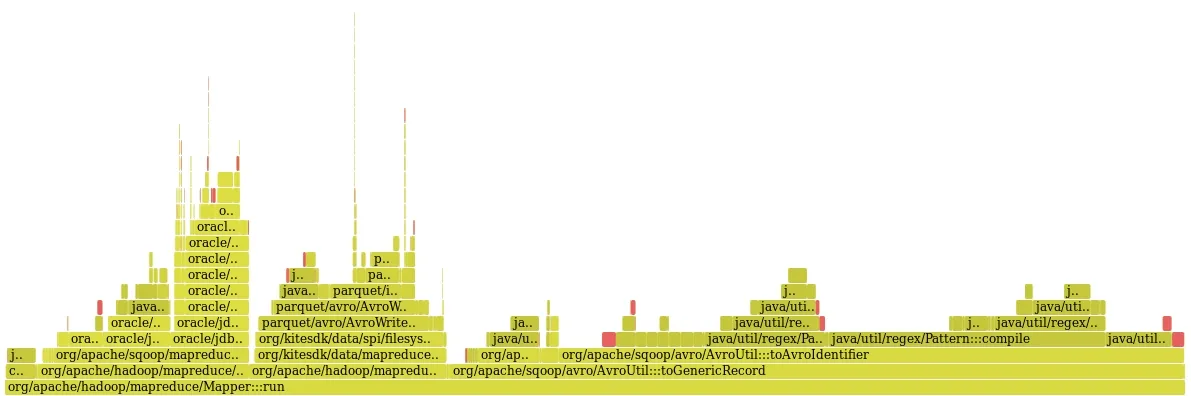
Hadoop performance troubleshooting with stack tracing, an introduction.
Hadoop performance troubleshooting with stack tracing, an introduction. Topic: This post is about profiling and performance tuning of distributed workloads and in particular Hadoop applications. You will learn of a profiler application we have developed and how it has successfully been applied to tuning Sqoop to improve the throughput of data transfer from Oracle to
-
Flame Graphs for Oracle
Flame Graphs for Oracle Topic: This post is a hands-on introduction to using on-CPU Flame Graphs for investigating Oracle workloads. This technique is about collecting and visualizing sampled stack trace data to analyze and troubleshoot Oracle processes at the OS level (in particular applied to Linux). Motivations: The techniques and tools described here can be